Anxiety in Young Adults: Why So Many People in Salt Lake City Are Struggling Right Now
I work with young adults across Salt Lake City, and anxiety is by far the most common thing people end up on my velvety green therapy couch for. They describe an anxiety that is near constant - anxiety about jobs, relationships, bodies, the future, productivity, and the world.
This isn’t the stereotypical “can’t leave the house” anxiety (though that happens too), but the quieter, more insidious kind:
Constant overthinking
Decision paralysis
Feeling behind no matter how much you do
A nervous system that never seems to power down
So what’s actually going on?
Salt Lake City Is a High-Pressure Place to Be a Young Adult
Salt Lake City has changed a lot in the past decade. Growth, opportunity, tech, wellness culture, hustle culture, all layered on top of deeply ingrained social expectations.
Many young adults here grew up with:
Strong messages about being “good,” “productive,” or “successful”
Clear timelines for life milestones
A heavy emphasis on self-control and self-improvement
Even for those who didn’t grow up religious, the cultural residue is still there:
Be disciplined. Be impressive. Don’t mess up. Don’t fall behind.
Perfectionism Is Practically a Survival Strategy Here
Perfectionism isn’t about wanting things to be perfect. It’s about trying to stay safe.
For many young adults in Salt Lake City, perfectionism developed as a way to:
Avoid criticism or disappointment
Stay connected to family or community
Feel worthy of rest, love, or ease
The problem?
Perfectionism keeps your nervous system in a constant state of monitoring and threat detection.
When your body believes:
“If I mess this up, something bad will happen”
Productivity Culture Keeps Anxiety on a Loop
Salt Lake City loves wellness. And ambition. And optimization.
On the surface, that sounds great. But for anxious nervous systems, productivity culture sends a constant message:
You should be doing more
Rest must be earned
Slowing down is lazy or indulgent
Even “self-care” can become another thing to fail at.
When your worth feels tied to output, your body never gets the signal that it’s safe to rest. Anxiety thrives in that space.
Religious and Cultural Conditioning Still Lives in the Body
Many young adults I work with have left (or are questioning) the religious structures they were raised in.
Even after beliefs change, the body may still carry:
Hypervigilance
Fear of doing the “wrong” thing
A deep discomfort with uncertainty
Shame around desire, anger, or rest
This can show up as anxiety that feels confusing or “out of nowhere.”
Nervous System Overload Is the Common Denominator
When I zoom out, I don’t see “fragile” young adults.
I see nervous systems that have been asked to do too much for too long.
Chronic anxiety often means:
Your system has been in fight-or-flight for years
You’ve learned to override exhaustion
You’re highly capable, highly aware, and deeply overwhelmed
Anxiety Isn’t a Personal Failure — It’s a Signal
This part matters, so I’ll say it clearly:
Anxiety is not a sign that you’re bad at life.
It’s a sign that something inside you has been on high alert without enough support.
Many young adults assume:
“If I could just be more confident / disciplined / healed, this would stop.”
But anxiety doesn’t resolve through self-criticism or insight alone. It resolves when your nervous system learns, slowly and safely, that it doesn’t have to brace anymore.
What Actually Helps Anxiety in Young Adults
For many people, real relief comes from:
Understanding anxiety through the lens of the nervous system
Learning how avoidance keeps anxiety alive
Building tolerance for discomfort
Working with a therapist who understands both the why and the how
Especially in a place like Salt Lake City, finding an anxiety therapist who understands the cultural context matters more than people realize.
Common Questions I Hear
Is anxiety really that common in young adults?
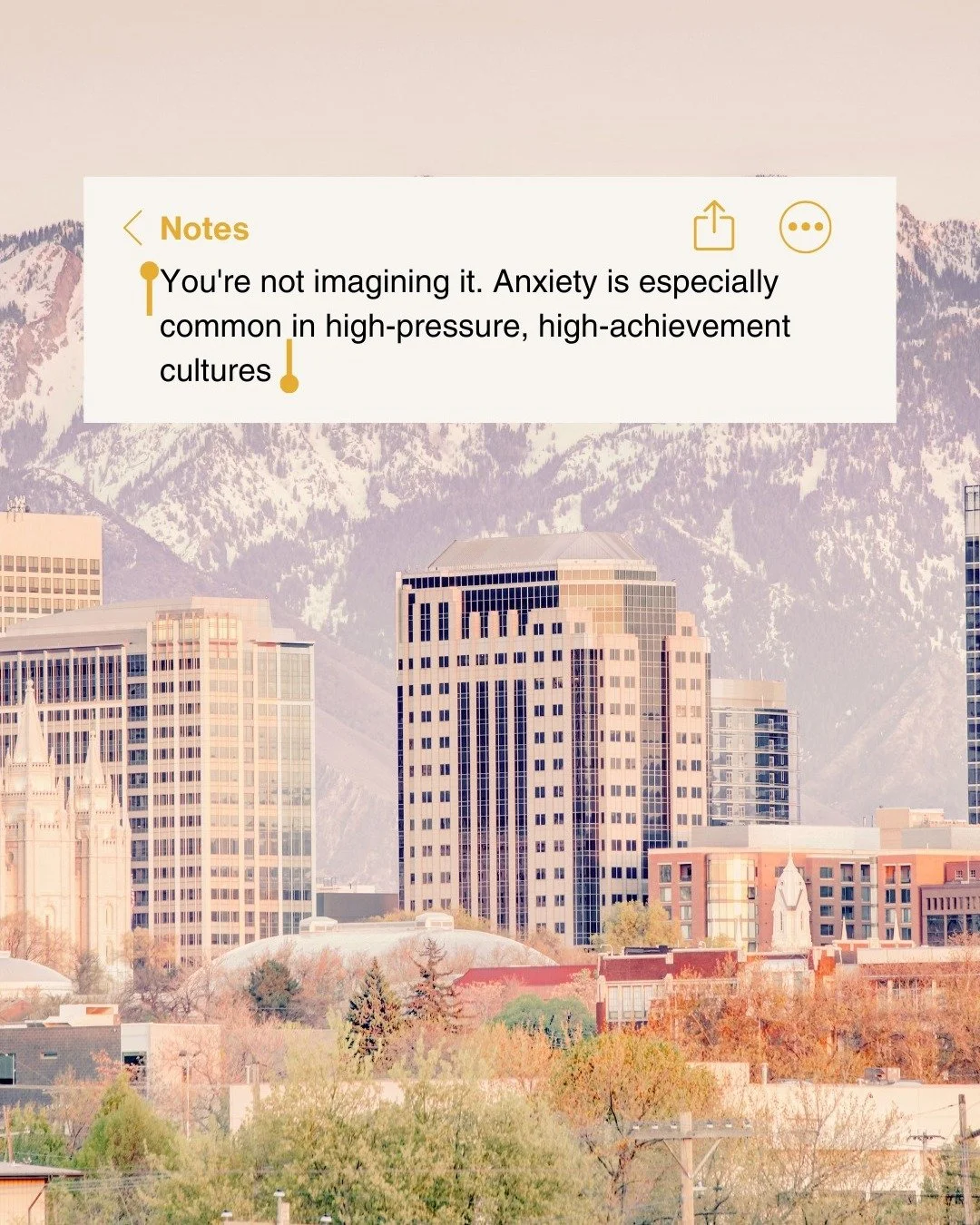
Yes. Especially in high-pressure, high-achievement cultures. You’re not imagining it.
Do I need a therapist who specializes in anxiety?
Often, yes. Anxiety has specific patterns that benefit from specialized approaches, especially when it’s been present for years.
How do I find the right anxiety therapist in Salt Lake City?
Look for someone who understands nervous system regulation, avoidance patterns, and the cultural factors that shape anxiety, not just coping skills.
If this post felt uncomfortably accurate, it might be time for support.
Anxiety isn’t something you have to push through or outthink. With the right support, it can actually become quieter. If you’re looking for anxiety therapy in Salt Lake City and want to work with someone who understands perfectionism, avoidance, and nervous system overwhelm, you can get in touch here to learn more.