Anxiety vs. Stress: When It's Time to See a Therapist in Utah
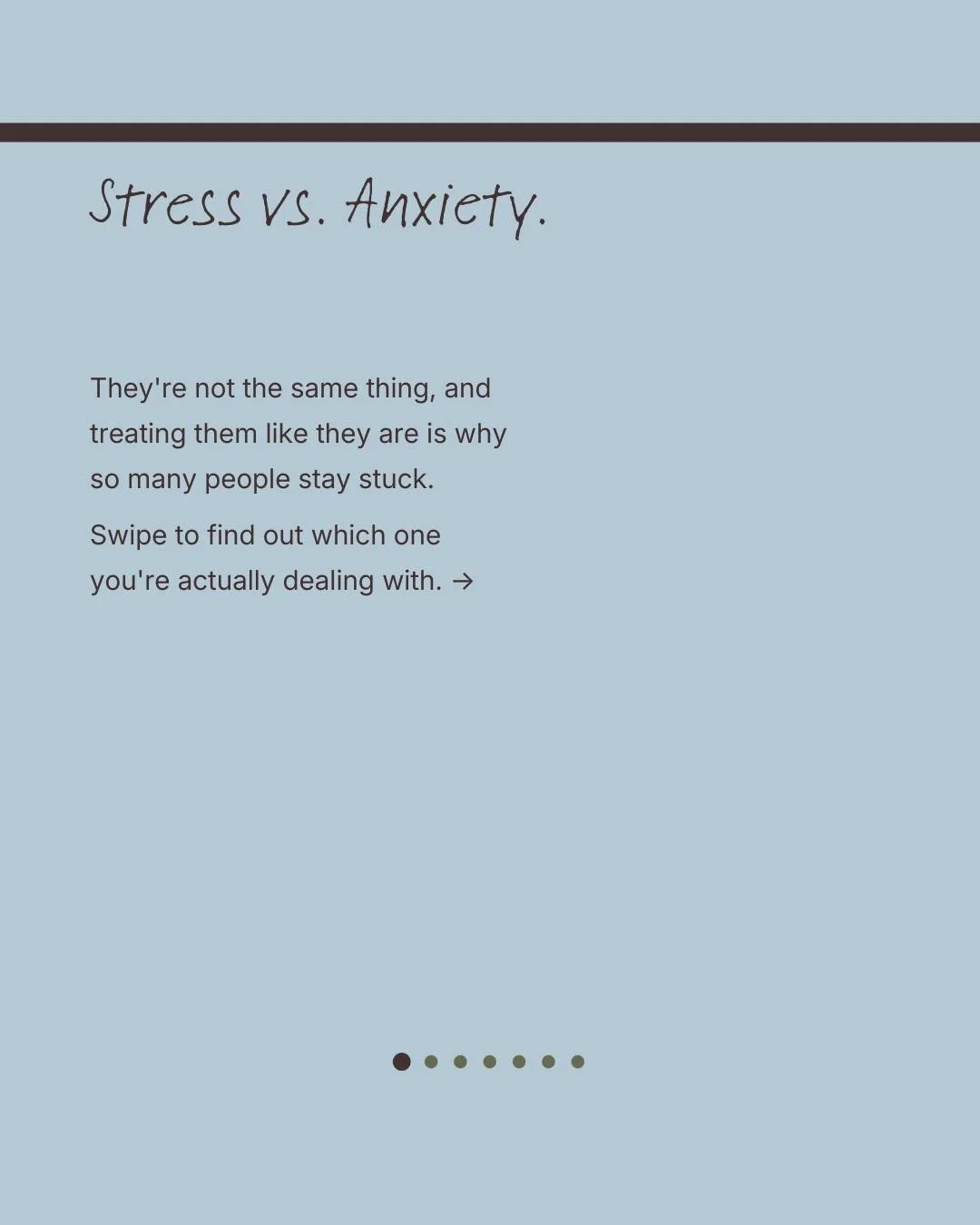
Stress and anxiety get lumped together a lot. And honestly, it makes sense, they can feel pretty similar in the moment. But they're not the same thing, and treating them like they are is part of why so many people spend years just... managing, instead of actually getting better.
Stress Has a Cause. Anxiety Doesn't Need One.
Stress is your brain responding to something real. Deadlines, conflict, a to-do list that's completely out of control. It's unpleasant, but it makes sense. When the thing causing it goes away, stress usually follows.
Anxiety doesn't play by those rules. It's the 2am spiral about nothing specific. The dread that shows up on a perfectly fine Tuesday. The tight chest before something that, logically, you know is fine. Anxiety doesn't need a reason, it'll manufacture one if it has to.
So When Is It Actually a Problem?
Here's the honest version:
It's been going on for months. A rough patch is normal. Feeling like you're just barely keeping it together as a baseline is not something you have to accept.
It's leaking into everything. Sleep, relationships, work, your ability to enjoy literally anything. Anxiety is sneaky that way, it doesn't announce itself, it just quietly makes everything harder.
Your world is getting smaller. Avoidance is anxiety's best friend. Every time you skip something because it feels like too much, anxiety gets a little stronger and your life gets a little narrower. Not a great trade.
You're exhausted from managing it. The mental energy it takes to white-knuckle your way through anxiety is significant. If you're tired, that tracks.
What Actually Helps
Good news: anxiety responds really well to treatment. Here are some of the approaches worth knowing about.
CBT (Cognitive Behavioral Therapy) is the workhorse of anxiety treatment for a reason. It helps you identify the thought loops keeping you stuck and gives you practical tools to interrupt them. Not glamorous, but it works.
ERP (Exposure and Response Prevention) sounds scarier than it is. The idea is simple: instead of avoiding the things that make you anxious, you face them, gradually, intentionally, with support, without doing the things you'd normally do to escape the discomfort. Checking your phone compulsively, asking for reassurance, leaving early, avoiding altogether. ERP helps your brain learn, through actual experience, that the thing you're dreading isn't going to destroy you. It's most well-known as a treatment for OCD, but it's genuinely effective for anxiety across the board. It's uncomfortable work. It also tends to create the kind of lasting change that other approaches sometimes don't.
Mindfulness-based approaches aren't about becoming a zen monk. They're about building enough distance from your anxious thoughts that they stop running the show.
Somatic work gets at the fact that anxiety lives in your body, not just your head. Sometimes thinking your way through it only gets you so far.
Most good therapists don't just pick one and call it a day, the approach should fit you, not the other way around.
The Part Where I Tell You to Reach Out
You don't have to be in crisis to come to therapy. You don't have to have the worst anxiety of anyone you know. You just have to be tired of feeling like this and ready to try something different.
If you're in Salt Lake City or anywhere in Utah, we're here.